

What are the security measures for liquid storage tanks?
Oct 05, 2026
As a supplier of Liquid Storage Tanks, ensuring the security of these tanks is of utmost importance. Liquid storage tanks are used to store a wide range of substances, from water and oil to hazardous chemicals. The improper handling and storage of these liquids can lead to serious consequences, including environmental pollution, property damage, and even loss of life. In this blog, we will explore the various security measures that should be implemented for liquid storage tanks.
1. Design and Construction Standards
The first line of defense in tank security starts with proper design and construction. Tanks should be designed according to recognized industry standards such as the American Petroleum Institute (API) standards for oil storage tanks or the American Society of Mechanical Engineers (ASME) codes for pressure vessels. These standards ensure that tanks are built to withstand the internal and external pressures they will be subjected to during normal operation.
- Material Selection: The choice of materials is crucial. For example, when storing corrosive liquids like acids or alkalis, tanks made of corrosion - resistant materials such as stainless steel or fiberglass - reinforced plastic (FRP) should be used. For high - pressure applications, materials with high tensile strength are required.
- Structural Integrity: Tanks should be designed with proper reinforcement to prevent deformation or rupture. This includes the use of stiffeners, support structures, and proper welding techniques. The foundation on which the tank is placed is also critical. It must be stable and able to support the weight of the tank and its contents without settling or shifting.
2. Installation and Commissioning
Proper installation is essential for the long - term security of liquid storage tanks.
- Site Selection: The location of the tank should be carefully chosen. It should be away from potential sources of ignition, such as electrical equipment or open flames. It should also be on a level surface with adequate drainage to prevent water accumulation around the tank.
- Installation Procedures: During installation, all components of the tank, including valves, pipes, and fittings, should be installed correctly and tightened to the appropriate torque. After installation, a thorough inspection and testing should be carried out. This includes pressure testing to ensure that the tank can withstand the rated pressure without leakage.
3. Monitoring and Inspection
Regular monitoring and inspection are necessary to detect any potential problems early.
- Level and Pressure Monitoring: Installing level sensors and pressure gauges allows operators to continuously monitor the amount of liquid in the tank and the internal pressure. Abnormal levels or pressures can indicate a problem, such as a leak or a blockage in the piping system.
- Visual Inspection: Regular visual inspections should be conducted to check for signs of corrosion, leaks, or damage to the tank's structure. This includes inspecting the exterior of the tank, the welds, and the connections. Non - destructive testing methods, such as ultrasonic testing or magnetic particle testing, can also be used to detect internal flaws in the tank walls.
4. Leak Detection and Prevention
Leaks are one of the most significant risks associated with liquid storage tanks.
- Leak Detection Systems: There are several types of leak detection systems available. For example, interstitial monitoring systems can detect leaks between the inner and outer layers of a double - walled tank. Electronic sensors can be installed around the tank to detect the presence of leaked liquid.
- Secondary Containment: Secondary containment structures, such as berms or dikes, should be installed around the tank. These structures are designed to contain any leaked liquid in case of a rupture or spill, preventing it from spreading into the environment.
5. Fire and Explosion Prevention
Many liquids stored in tanks are flammable or combustible, so fire and explosion prevention measures are crucial.

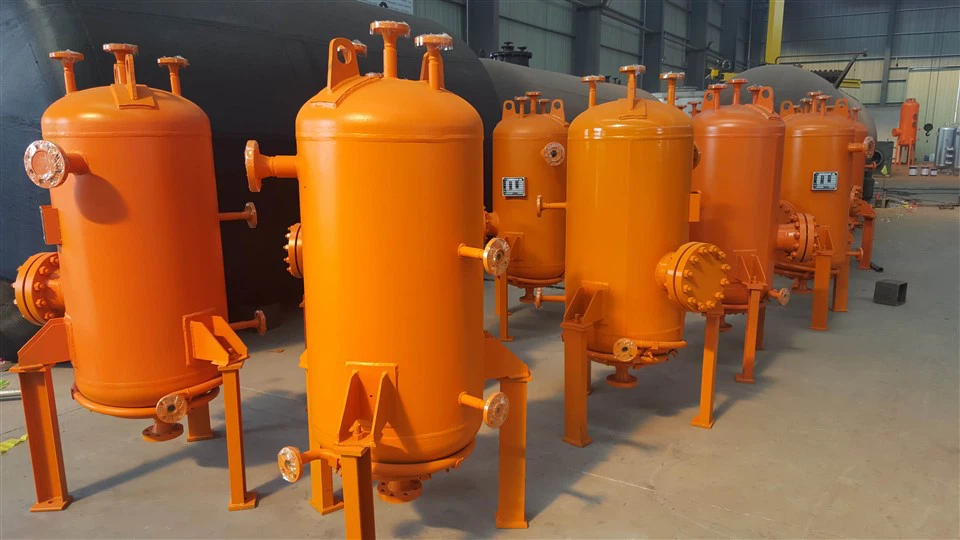
- Ventilation: Adequate ventilation is required to prevent the accumulation of flammable vapors inside the tank and in the surrounding area. Vent systems should be designed to allow the safe release of vapors while preventing the entry of air that could cause an explosive mixture.
- Fire Protection Systems: Installing fire protection systems, such as sprinklers or foam suppression systems, can help to control or extinguish a fire in case of an emergency. Additionally, fire - resistant coatings can be applied to the tank to reduce the risk of ignition.
6. Security and Access Control
Restricting access to the tank area is an important security measure.
- Fencing and Gates: Surrounding the tank area with a fence and installing locked gates can prevent unauthorized access. This helps to protect the tank from vandalism or accidental damage.
- Security Cameras and Alarms: Installing security cameras allows for continuous monitoring of the tank area. Alarms can be set up to alert operators in case of any unauthorized entry or abnormal activity.
7. Training and Emergency Response
Proper training of personnel is essential for the safe operation of liquid storage tanks.
- Operator Training: Operators should be trained on the proper operation, maintenance, and inspection of the tanks. They should also be trained on how to respond to emergencies, such as leaks, fires, or explosions.
- Emergency Response Plans: Developing and implementing an emergency response plan is crucial. This plan should include procedures for evacuating the area, shutting off valves, and contacting emergency services. Regular drills should be conducted to ensure that all personnel are familiar with the emergency response procedures.
At our company, we understand the importance of these security measures. We offer a wide range of Liquid Storage Tanks, including Liquid Ammonia Storage Tanks and Propane Tanks. Our tanks are designed and manufactured to the highest standards, and we can provide comprehensive support in terms of installation, maintenance, and security.
If you are in need of a reliable liquid storage solution, we invite you to contact us for more information and to discuss your specific requirements. Our team of experts is ready to assist you in finding the best tank for your needs and ensuring its safe and efficient operation.
References
- American Petroleum Institute (API). API Standards for Oil Storage Tanks.
- American Society of Mechanical Engineers (ASME). ASME Codes for Pressure Vessels.
- National Fire Protection Association (NFPA). NFPA Standards for Fire and Explosion Prevention.