

What are the requirements for a liquid storage tank in a vibration - prone area?
Jul 31, 2026
In regions prone to vibrations, such as earthquake - affected areas or sites near heavy industrial machinery, the design and construction of liquid storage tanks must meet a series of strict requirements to ensure safety and reliability. As a Liquid Storage Tank supplier, we have in - depth knowledge and rich experience in this field. In this blog, we will explore the key requirements for liquid storage tanks in vibration - prone areas.
Structural Design Requirements
The structural design of liquid storage tanks in vibration - prone areas is of utmost importance. First, the tank must have sufficient strength to withstand the dynamic forces generated by vibrations. This requires careful selection of materials. High - strength steel is often a preferred choice due to its excellent mechanical properties. For example, in earthquake - prone regions, the steel used for the tank shell should have high yield strength and good ductility to absorb and dissipate energy during an earthquake.
The shape of the tank also plays a crucial role. Cylindrical tanks are commonly used because they distribute stress more evenly compared to other shapes. The height - to - diameter ratio of the tank should be carefully considered. A lower height - to - diameter ratio can enhance the stability of the tank under vibration. In addition, the tank should be designed with proper stiffeners to reinforce the structure and prevent buckling.
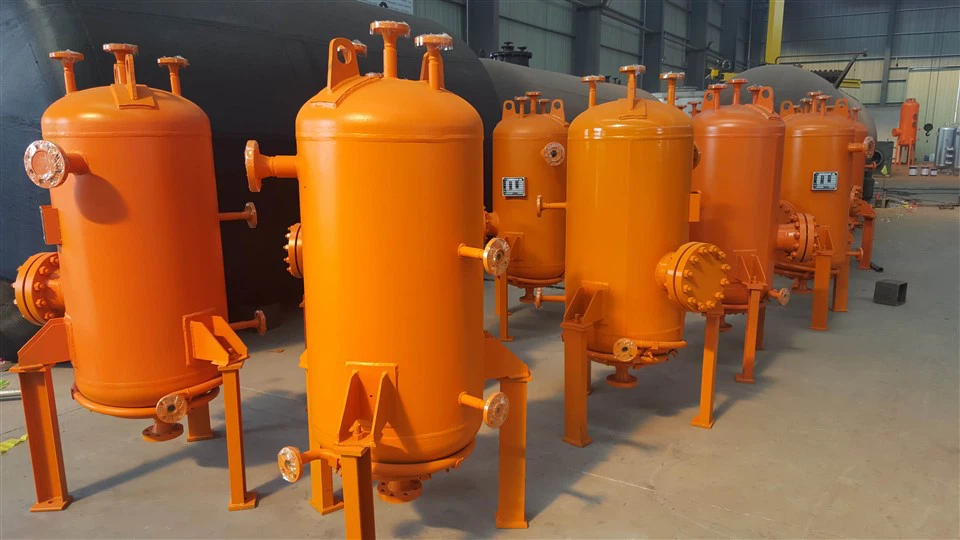

The foundation of the tank is another critical aspect. A well - designed foundation can effectively transfer the load from the tank to the ground and reduce the impact of vibrations. In vibration - prone areas, a deep foundation, such as a pile foundation, may be required. The pile foundation can penetrate through soft soil layers and reach more stable strata, providing better support for the tank.
Seismic Resistance Requirements
Earthquakes are one of the most significant sources of vibrations in many areas. Liquid storage tanks need to be designed to resist seismic forces. According to seismic design codes, tanks should be able to withstand a certain level of ground motion without significant damage.
One of the key measures for seismic resistance is the use of flexible connections. Flexible connections between the tank and its accessories, such as pipes and valves, can absorb the relative movement caused by seismic vibrations. This helps to prevent damage to the tank and its connected components.
Another important aspect is the installation of seismic isolation devices. Seismic isolation systems can reduce the transfer of seismic energy to the tank. For example, rubber bearings can be used to isolate the tank from the ground, allowing the tank to move independently during an earthquake.
Leakage Prevention Requirements
In vibration - prone areas, the risk of leakage from liquid storage tanks increases. Therefore, strict leakage prevention measures are necessary. The tank should be equipped with high - quality seals and gaskets to prevent liquid from leaking out. Regular inspections of the seals and gaskets are required to ensure their integrity.
The tank shell should also be designed to prevent cracks. Cracks can occur due to the stress caused by vibrations, and they can lead to leakage. Non - destructive testing methods, such as ultrasonic testing and magnetic particle testing, can be used to detect potential cracks in the tank shell. In addition, the tank should be equipped with a secondary containment system. A secondary containment system can catch any leaked liquid and prevent it from spreading to the environment.
Monitoring and Maintenance Requirements
Continuous monitoring of the liquid storage tank is essential in vibration - prone areas. Monitoring systems can be installed to measure parameters such as vibration levels, stress, and strain. By analyzing the data from these monitoring systems, potential problems can be detected early, and appropriate measures can be taken to prevent failures.
Regular maintenance is also crucial. Maintenance activities include inspection of the tank structure, cleaning of the tank interior, and replacement of worn - out components. Maintenance schedules should be established based on the operating conditions of the tank and the requirements of relevant standards.
Compatibility with Stored Liquids
The stored liquid in the tank can also affect the requirements for the tank in a vibration - prone area. Different liquids have different properties, such as density, viscosity, and chemical reactivity. For example, Liquid Ammonia Storage Tank requires special materials and design considerations due to the corrosive nature of ammonia.
In addition, the vapor pressure of the stored liquid can also impact the tank design. High - vapor - pressure liquids may require additional pressure - relief devices to prevent over - pressurization of the tank during vibrations.
Fire and Explosion Prevention Requirements
In vibration - prone areas, the risk of fire and explosion associated with liquid storage tanks is also a concern. Tanks storing flammable liquids, such as Propane Tank, need to be designed with appropriate fire - prevention and explosion - prevention measures.
The tank should be located at a safe distance from potential ignition sources. Fire - resistant coatings can be applied to the tank surface to enhance its fire - resistance. In addition, explosion - proof electrical equipment should be used in the vicinity of the tank to prevent sparks that could ignite the flammable liquid.
Regulatory and Standard Requirements
Liquid storage tanks in vibration - prone areas must comply with relevant regulatory requirements and industry standards. These standards cover various aspects, such as design, construction, installation, and operation of the tanks. For example, in the United States, the American Petroleum Institute (API) has issued a series of standards for the design and construction of storage tanks.
Compliance with these standards ensures that the tanks are safe and reliable. It also helps to avoid potential legal issues and liabilities.
Conclusion
In conclusion, liquid storage tanks in vibration - prone areas need to meet a wide range of requirements in terms of structural design, seismic resistance, leakage prevention, monitoring and maintenance, compatibility with stored liquids, fire and explosion prevention, and regulatory compliance. As a Liquid Storage Tank supplier, we are committed to providing high - quality tanks that meet these requirements.
If you are in need of liquid storage tanks for a vibration - prone area, we invite you to contact us for a detailed discussion. Our team of experts can provide you with customized solutions based on your specific needs.
References
- American Petroleum Institute (API). API 650: Welded Steel Tanks for Oil Storage.
- International Building Code (IBC). Seismic Design Provisions for Buildings.
- National Fire Protection Association (NFPA). NFPA 30: Flammable and Combustible Liquids Code.