

What are the explosion - proof requirements for a liquid ammonia storage tank?
Oct 20, 2025
What are the explosion - proof requirements for a liquid ammonia storage tank?
As a supplier of Liquid Ammonia Storage Tanks, I understand the critical importance of explosion - proof requirements for these tanks. Liquid ammonia is a widely used industrial chemical, but it also poses significant explosion and fire risks due to its physical and chemical properties. In this blog, I will delve into the various explosion - proof requirements for liquid ammonia storage tanks.
1. Design and Construction Requirements
Material Selection
The materials used in the construction of liquid ammonia storage tanks must have good corrosion resistance and mechanical properties. Carbon steel is a commonly used material, but it needs to be properly treated to prevent corrosion caused by ammonia. For example, internal coatings can be applied to the tank to isolate the ammonia from the steel surface. High - strength and corrosion - resistant alloys may also be considered in some cases, especially for tanks in harsh environments.
Structural Design
The tank structure should be designed to withstand the pressure and stress generated during normal operation and possible abnormal situations. Adequate wall thickness is crucial to ensure the integrity of the tank. The design should also take into account factors such as seismic resistance and wind load. For large - scale liquid ammonia storage tanks, additional structural reinforcements may be required, such as stiffening rings or support structures.
Sealing Design
A good sealing system is essential to prevent ammonia leakage. All joints, flanges, and valves in the tank should be properly sealed. Gaskets made of suitable materials, such as rubber or PTFE, are commonly used to ensure a tight seal. Regular inspection and maintenance of the sealing system are necessary to detect and replace any damaged gaskets or seals in a timely manner.

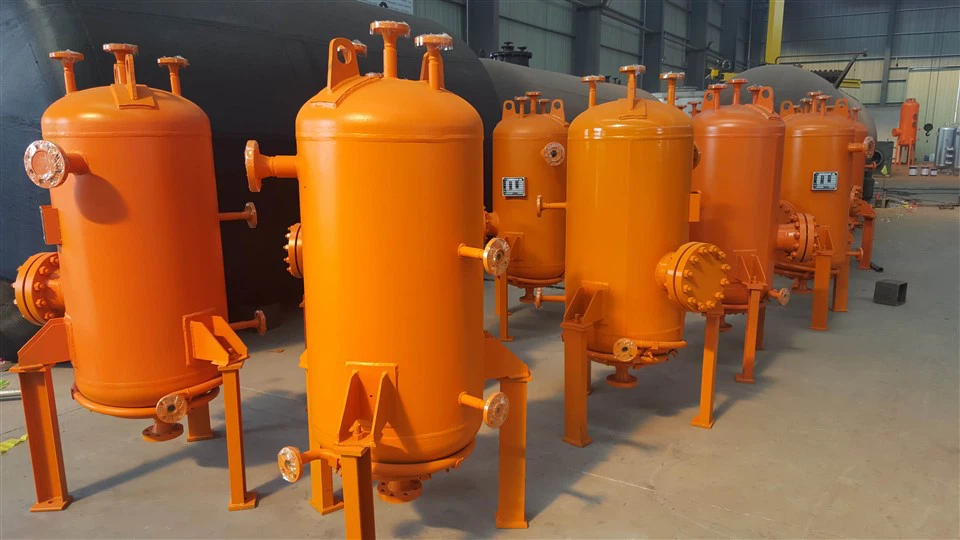
2. Installation Requirements
Location Selection
The location of the liquid ammonia storage tank is of great significance for explosion - proof. It should be installed in an open area away from sources of ignition, such as fireplaces, electrical equipment with sparks, and flammable material storage areas. There should also be sufficient safety distances from residential areas, public buildings, and other important facilities. Additionally, the site should have good ventilation to disperse any leaked ammonia quickly.
Foundation Installation
A stable foundation is required to support the weight of the liquid ammonia storage tank. The foundation should be designed and constructed according to the specifications of the tank. It should be able to withstand the static and dynamic loads during the operation of the tank. Proper leveling and anchoring of the tank on the foundation are necessary to prevent the tank from tilting or moving, which could lead to damage and leakage.
Piping Installation
The piping connected to the liquid ammonia storage tank should be installed correctly. The pipes should be of appropriate diameter and material to ensure smooth flow of ammonia. All pipes should be firmly fixed to prevent vibration - induced damage. Valves and fittings in the piping system should be installed in a way that allows for easy operation and maintenance. Additionally, proper grounding of the piping system is necessary to prevent electrostatic discharge, which could potentially ignite the ammonia.
3. Safety Equipment Requirements
Pressure Relief Devices
Pressure relief devices, such as safety valves, are essential for liquid ammonia storage tanks. These devices are designed to release excess pressure in the tank when it exceeds the set limit, preventing the tank from exploding due to over - pressure. The safety valves should be regularly inspected and calibrated to ensure their proper functioning.
Leak Detection Systems
Installing leak detection systems can help detect ammonia leakage in a timely manner. These systems can use sensors to detect the concentration of ammonia in the air around the tank. Once a leak is detected, an alarm can be triggered, allowing for immediate response and prevention of a potential explosion.
Fire - Fighting Equipment
Although liquid ammonia is not a flammable gas under normal conditions, it can form explosive mixtures with air under certain circumstances. Therefore, appropriate fire - fighting equipment, such as fire extinguishers and sprinkler systems, should be installed around the liquid ammonia storage tank. These equipment can be used to control fires and prevent the spread of fire in case of an accident.
4. Operation and Maintenance Requirements
Operator Training
All operators involved in the operation of liquid ammonia storage tanks should receive professional training. They should be familiar with the properties of liquid ammonia, the operation procedures of the tank and related equipment, and emergency response measures. Regular training and drills should be carried out to ensure that operators can respond correctly in case of an emergency.
Regular Inspection and Maintenance
Regular inspection and maintenance of the liquid ammonia storage tank are necessary to ensure its safe operation. Inspections should include checks on the tank structure, sealing system, safety equipment, and piping system. Any signs of corrosion, damage, or malfunction should be addressed immediately. Maintenance work should be carried out according to the manufacturer's recommendations and relevant safety standards.
Record - Keeping
Detailed records of the operation, inspection, and maintenance of the liquid ammonia storage tank should be kept. These records can provide valuable information for future reference and analysis. They can also help identify any potential problems or trends over time, allowing for proactive measures to be taken to prevent accidents.
Comparison with Other Storage Tanks
It is interesting to compare the explosion - proof requirements of liquid ammonia storage tanks with those of other chemical storage tanks, such as Propane Tanks and Nitrogen Storage Tanks.
Propane is a highly flammable gas, so propane tanks have strict requirements for preventing ignition sources. They need to be installed in well - ventilated areas and equipped with explosion - proof electrical equipment. In contrast, liquid ammonia is a toxic and corrosive substance, and its explosion - proof requirements focus more on preventing leakage and corrosion.
Nitrogen is an inert gas, and nitrogen storage tanks generally have relatively lower explosion - proof requirements compared to liquid ammonia and propane tanks. However, they still need to meet certain safety standards, such as pressure - resistant design and proper sealing, to ensure safe storage.
Conclusion
In conclusion, the explosion - proof requirements for liquid ammonia storage tanks are comprehensive and involve multiple aspects, including design, installation, safety equipment, and operation and maintenance. As a Liquid Ammonia Storage Tank supplier, we are committed to providing high - quality tanks that meet all relevant explosion - proof requirements. If you are in need of liquid ammonia storage tanks or have any questions about their explosion - proof requirements, please feel free to contact us for further discussion and procurement negotiation. We have a professional team that can provide you with detailed technical support and customized solutions to meet your specific needs.
References
- API 620 - Design and Construction of Large, Welded, Low - Pressure Storage Tanks.
- NFPA 58 - Liquefied Petroleum Gas Code.
- OSHA regulations related to chemical storage and handling.