

What are the ventilation systems for large - scale liquid storage tanks?
Sep 25, 2026
Large-scale liquid storage tanks are crucial components in various industries, including chemical, petrochemical, and food processing. These tanks are used to store a wide range of liquids, such as chemicals, fuels, and water. Proper ventilation is essential for the safe and efficient operation of these tanks, as it helps to prevent the buildup of hazardous gases, control the temperature, and maintain the quality of the stored liquid. In this blog post, I will discuss the different types of ventilation systems for large-scale liquid storage tanks, and as a liquid storage tank supplier, I'll also touch on how these systems are integrated into our products.
Importance of Ventilation in Large-Scale Liquid Storage Tanks
Before delving into the specific ventilation systems, it's important to understand why ventilation is so critical. When liquids are stored in large tanks, they can undergo various physical and chemical processes. For example, some liquids may evaporate, releasing volatile organic compounds (VOCs) or other hazardous gases. If these gases are allowed to accumulate inside the tank, they can create a flammable or explosive environment. Additionally, the temperature inside the tank can rise due to external heat sources or exothermic reactions within the liquid, which can also affect the stability and quality of the stored liquid. Ventilation helps to address these issues by removing the hazardous gases and regulating the temperature.
Types of Ventilation Systems
1. Natural Ventilation
Natural ventilation relies on the natural movement of air due to differences in temperature and pressure. In large-scale liquid storage tanks, natural ventilation can be achieved through the use of vents or openings at the top and bottom of the tank. Warm air inside the tank rises and exits through the upper vents, while cooler air enters through the lower vents. This creates a natural airflow that helps to remove the accumulated gases and maintain a stable temperature.
One advantage of natural ventilation is its simplicity and low cost. It does not require any mechanical equipment, so there are no energy costs associated with its operation. However, natural ventilation is highly dependent on external weather conditions, such as wind speed and temperature. In calm or cold weather, the airflow may be insufficient to provide adequate ventilation, which can lead to the buildup of hazardous gases.
2. Mechanical Ventilation
Mechanical ventilation uses fans or blowers to force air in and out of the tank. This type of ventilation system provides more reliable and consistent airflow compared to natural ventilation, as it is not affected by weather conditions. Mechanical ventilation can be further divided into two subtypes: forced ventilation and exhaust ventilation.
- Forced Ventilation: In forced ventilation, fans are used to blow fresh air into the tank. This helps to dilute the concentration of hazardous gases and maintain a positive pressure inside the tank, which prevents the ingress of external contaminants. Forced ventilation is often used in tanks that store liquids with high vapor pressures or that are prone to releasing large amounts of hazardous gases.
- Exhaust Ventilation: Exhaust ventilation uses fans to draw air out of the tank. This creates a negative pressure inside the tank, which causes fresh air to enter through the vents. Exhaust ventilation is effective in removing the accumulated gases from the tank, but it may also allow external contaminants to enter if the pressure differential is not properly controlled.
3. Inert Gas Blanketing
Inert gas blanketing is a specialized ventilation system that involves filling the vapor space above the liquid in the tank with an inert gas, such as nitrogen. The inert gas acts as a barrier between the liquid and the atmosphere, preventing the oxidation of the liquid and the formation of explosive mixtures. Inert gas blanketing is commonly used in tanks that store flammable or reactive liquids.
The inert gas is continuously supplied to the tank through a pressure control system, which maintains a slight positive pressure inside the tank. This ensures that any gas leaks occur out of the tank, rather than allowing air to enter. Inert gas blanketing requires a reliable source of inert gas and a proper control system to maintain the correct pressure and flow rate.
Ventilation Systems in Our Liquid Storage Tanks
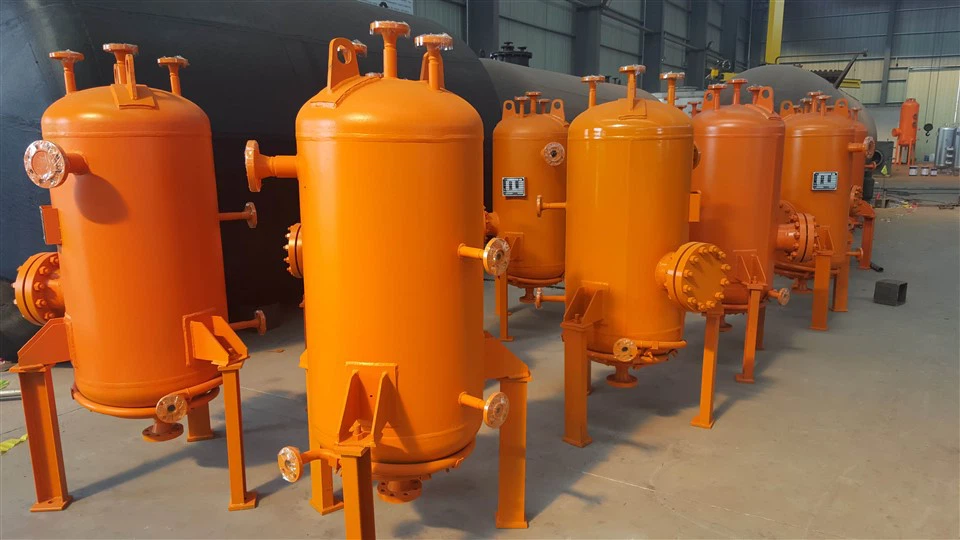
As a liquid storage tank supplier, we understand the importance of providing effective ventilation systems for our customers. We offer a range of liquid storage tanks, including Liquid Ammonia Storage Tank, Nitrogen Storage Tank, Propane Tank, Liquid Chlorine Storage Tank, and Deoxygenation Tower Reflux Tank. Each type of tank is designed with the appropriate ventilation system based on the properties of the stored liquid and the specific requirements of the application.
For example, our liquid ammonia storage tanks are equipped with mechanical ventilation systems to ensure the safe removal of ammonia vapors. Ammonia is a highly toxic and flammable gas, so proper ventilation is essential to prevent the formation of explosive mixtures. Our nitrogen storage tanks, on the other hand, often use inert gas blanketing to maintain the purity of the nitrogen and prevent contamination.
Considerations for Selecting a Ventilation System
When selecting a ventilation system for a large-scale liquid storage tank, several factors need to be considered:

- Properties of the Stored Liquid: The type of liquid being stored, its vapor pressure, flammability, and toxicity all influence the choice of ventilation system. For example, highly flammable liquids may require a more robust ventilation system, such as inert gas blanketing.
- Tank Size and Design: The size and design of the tank, including its shape, volume, and the number of openings, can affect the effectiveness of the ventilation system. Larger tanks may require more powerful fans or multiple vents to ensure adequate airflow.
- Environmental Conditions: The external weather conditions, such as temperature, humidity, and wind speed, can impact the performance of natural ventilation systems. In areas with extreme weather conditions, mechanical ventilation may be a more reliable option.
- Regulatory Requirements: There may be specific regulations and standards governing the ventilation of liquid storage tanks in different industries and regions. It is important to ensure that the selected ventilation system complies with all applicable regulations.
Conclusion
Proper ventilation is essential for the safe and efficient operation of large-scale liquid storage tanks. Natural ventilation, mechanical ventilation, and inert gas blanketing are the main types of ventilation systems available, each with its own advantages and limitations. As a liquid storage tank supplier, we are committed to providing our customers with high-quality tanks equipped with the appropriate ventilation systems.
If you are in need of a liquid storage tank and want to discuss the best ventilation system for your specific application, please feel free to contact us for procurement and negotiation. We have a team of experienced engineers who can help you select the right tank and ventilation system based on your requirements.
References
- American Petroleum Institute (API). API Standard 2000, Venting Atmospheric and Low-Pressure Storage Tanks.
- National Fire Protection Association (NFPA). NFPA 30, Flammable and Combustible Liquids Code.
- International Organization for Standardization (ISO). ISO 16528, Tanks and accessories - Venting devices for tanks containing flammable and combustible liquids.