

What are the ventilation requirements for the pump room of a liquid ammonia storage tank?
Oct 07, 2026
Hey there! As a supplier of Liquid Ammonia Storage Tanks, I often get asked about the ventilation requirements for the pump room of these tanks. It's a crucial topic because proper ventilation is super important for safety and the efficient operation of the whole system.
First off, let's talk about why ventilation is such a big deal in a liquid ammonia pump room. Liquid ammonia is a hazardous chemical. It's highly toxic, and if it leaks, it can cause serious health problems to anyone nearby. Inhaling ammonia vapors can irritate the eyes, nose, throat, and lungs. In severe cases, it can even lead to respiratory failure. Also, ammonia forms explosive mixtures with air in certain concentrations. So, having good ventilation helps to prevent the build - up of ammonia vapors to dangerous levels.
Now, let's dig into the actual ventilation requirements. The ventilation rate is a key factor. In general, the pump room should have a ventilation system that can provide a minimum of 8 air changes per hour. This means that the entire volume of air in the pump room should be replaced with fresh air at least 8 times every hour. This continuous exchange of air helps to keep the ammonia concentration in the air below the safe limit.
The ventilation system also needs to be designed to handle the worst - case scenario. For example, if there's a sudden large - scale leak of liquid ammonia, the system should be able to quickly dilute the leaked ammonia and remove it from the pump room. To achieve this, some experts recommend having a ventilation rate of up to 12 air changes per hour in high - risk areas.
Another important aspect is the location of the ventilation inlets and outlets. The inlets should be placed near the floor. This is because ammonia is lighter than air, and in case of a leak, the ammonia vapors tend to rise. By having the inlets near the floor, fresh air can be drawn in at the lower level and help to push the rising ammonia vapors towards the outlets.
The outlets, on the other hand, should be located at the top of the pump room. This allows the ammonia - contaminated air to be expelled effectively. It's also a good idea to direct the outlets away from areas where people are likely to be present, such as walkways or other occupied buildings.
In addition to the natural ventilation, mechanical ventilation systems are often used in pump rooms. These systems usually consist of fans and ducts. The fans can be either exhaust fans or supply fans. Exhaust fans are used to pull the contaminated air out of the pump room, while supply fans are used to bring fresh air in. A combination of both types of fans can provide better ventilation control.
When it comes to the type of fans, they need to be explosion - proof. Since ammonia can form explosive mixtures with air, using non - explosion - proof fans can be extremely dangerous. Explosion - proof fans are designed to prevent sparks or other ignition sources from being generated inside the fan, reducing the risk of an explosion.
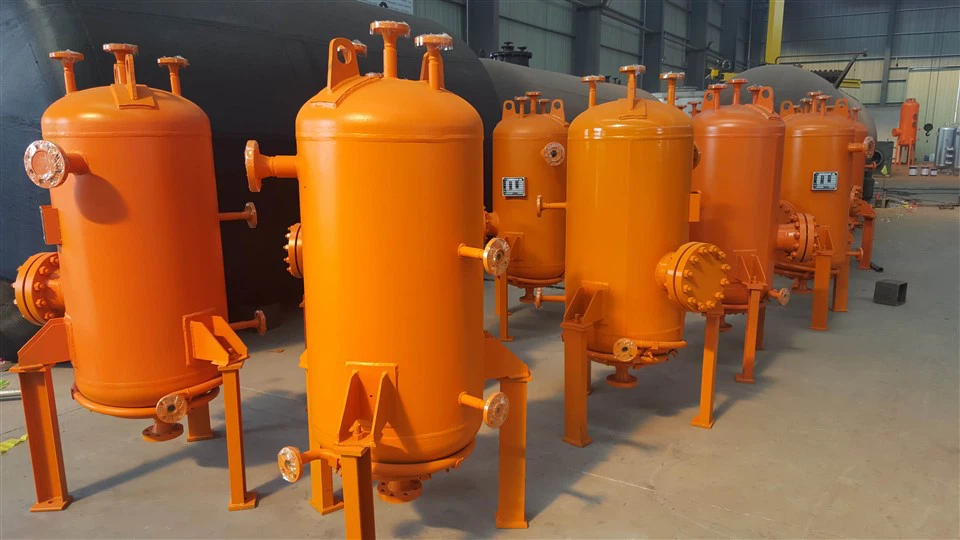

Monitoring the ventilation system is also essential. There should be sensors installed in the pump room to detect the concentration of ammonia in the air. If the ammonia concentration exceeds the safe limit, an alarm should be triggered, and the ventilation system should be adjusted accordingly. Some advanced systems can even automatically increase the ventilation rate when a high ammonia concentration is detected.
Now, if you're in the market for a Liquid Ammonia Storage Tank, we've got you covered. Our tanks are made with high - quality materials and are designed to meet all the safety standards. We also offer guidance on setting up the proper ventilation system for the pump room.
If you're also interested in other types of storage tanks, we have Propane Tank and Liquid Storage Tank options available. These tanks are suitable for different applications and come in various sizes.
Whether you're a small - scale business or a large industrial facility, we can provide the right storage solution for you. If you have any questions or want to discuss your specific requirements, don't hesitate to reach out. We're here to help you make the best choice for your storage needs.
In conclusion, proper ventilation in the pump room of a liquid ammonia storage tank is non - negotiable. It's a matter of safety and compliance with regulations. By following the ventilation requirements and using the right equipment, you can ensure a safe and efficient operation of your liquid ammonia storage system. So, if you're thinking about purchasing a liquid ammonia storage tank or need advice on ventilation, just drop us a line, and we'll work together to find the perfect solution.
References
- Occupational Safety and Health Administration (OSHA) standards on chemical storage and ventilation.
- American National Standards Institute (ANSI) guidelines for ammonia storage and handling.