

What are the quality standards for liquid storage tanks?
Aug 17, 2026
As a supplier of liquid storage tanks, I understand the critical importance of quality standards in this industry. Liquid storage tanks are used to store a wide range of substances, from water and chemicals to petroleum products. Ensuring that these tanks meet high - quality standards is not only essential for the safety of the stored liquids but also for the protection of the environment and the people who interact with them.
Material Quality
The choice of materials for liquid storage tanks is the cornerstone of quality. Different liquids require different materials to prevent corrosion, leakage, and degradation. For example, stainless steel is a popular choice for storing corrosive chemicals because of its high resistance to rust and chemical attack. It can withstand a wide range of temperatures and pressures, making it suitable for various industrial applications.
Carbon steel is another commonly used material, especially for storing non - corrosive liquids such as water and some types of petroleum products. However, carbon steel needs to be properly coated to prevent rusting. Epoxy coatings are often applied to the interior and exterior of carbon steel tanks to provide an extra layer of protection.
Fiberglass - reinforced plastic (FRP) is also a viable option, particularly for smaller - scale storage. FRP tanks are lightweight, corrosion - resistant, and relatively easy to install. They are commonly used for storing water, agricultural chemicals, and some food - grade liquids.
Design and Engineering Standards
A well - designed liquid storage tank is crucial for its performance and longevity. The design should take into account factors such as the volume of the liquid to be stored, the pressure and temperature conditions, and the location of the tank.
The tank's structural integrity is of utmost importance. It should be able to withstand the weight of the liquid, as well as external forces such as wind, earthquakes, and snow loads. Engineers use advanced software and mathematical models to calculate the stress and strain on the tank walls and ensure that they are within safe limits.
The shape of the tank also plays a role in its design. Cylindrical tanks are the most common because they distribute stress evenly and are easier to manufacture. However, rectangular or spherical tanks may be used in specific applications where space or other requirements dictate.
Manufacturing Processes
High - quality manufacturing processes are essential for producing reliable liquid storage tanks. The manufacturing process should follow strict quality control procedures to ensure that every tank meets the required standards.
Welding is a critical part of the manufacturing process, especially for metal tanks. Welds should be strong, free of defects, and properly inspected. Non - destructive testing methods such as ultrasonic testing and X - ray inspection are used to detect any internal flaws in the welds.
For FRP tanks, the manufacturing process involves layering fiberglass and resin. The layers should be applied evenly, and the curing process should be carefully controlled to ensure the strength and durability of the tank.
Testing and Inspection
Before a liquid storage tank is put into service, it must undergo rigorous testing and inspection. Pressure testing is one of the most important tests. The tank is filled with water or another suitable liquid and pressurized to a specified level to check for leaks and ensure its structural integrity.
Leak detection is also crucial. Various methods can be used, including visual inspection, pressure decay testing, and the use of leak detection sensors. These sensors can detect even the smallest leaks and provide early warning of potential problems.
In addition to these tests, the tank should be inspected for its overall quality, including the finish of the surface, the alignment of components, and the functionality of any valves or fittings.
Safety Features
Safety is a top priority when it comes to liquid storage tanks. Tanks should be equipped with a range of safety features to prevent accidents and protect the environment.
Overfill prevention devices are essential to prevent the tank from overflowing. These devices can be mechanical or electronic and are designed to stop the filling process when the tank reaches its maximum capacity.
Pressure relief valves are another important safety feature. They are designed to release excess pressure in the tank to prevent it from exploding. These valves should be regularly inspected and maintained to ensure their proper functioning.
In addition, tanks should be located in a safe area away from sources of ignition and other potential hazards. They should also be surrounded by a secondary containment system to prevent spills from spreading in case of a leak.
Compliance with Regulations
Liquid storage tanks must comply with a variety of local, national, and international regulations. These regulations are in place to ensure the safety of the public and the environment.
In the United States, for example, the Environmental Protection Agency (EPA) has strict regulations regarding the storage of hazardous chemicals. Tanks must be registered, and operators must follow specific procedures for handling, storing, and disposing of these chemicals.
Internationally, the International Organization for Standardization (ISO) has developed a series of standards for liquid storage tanks. These standards cover everything from material selection to testing and inspection.
Examples of Different Types of Liquid Storage Tanks
There are many different types of liquid storage tanks, each with its own specific quality standards. For example, Propane Tank is designed to store propane, a highly flammable gas. These tanks must be made of materials that can withstand high pressures and be equipped with safety features such as pressure relief valves and overfill prevention devices.
Deoxygenation Tower Reflux Tank is used in the chemical industry to store and process liquids in a deoxygenation tower. These tanks must be made of materials that are resistant to corrosion and be designed to handle the specific chemical processes involved.
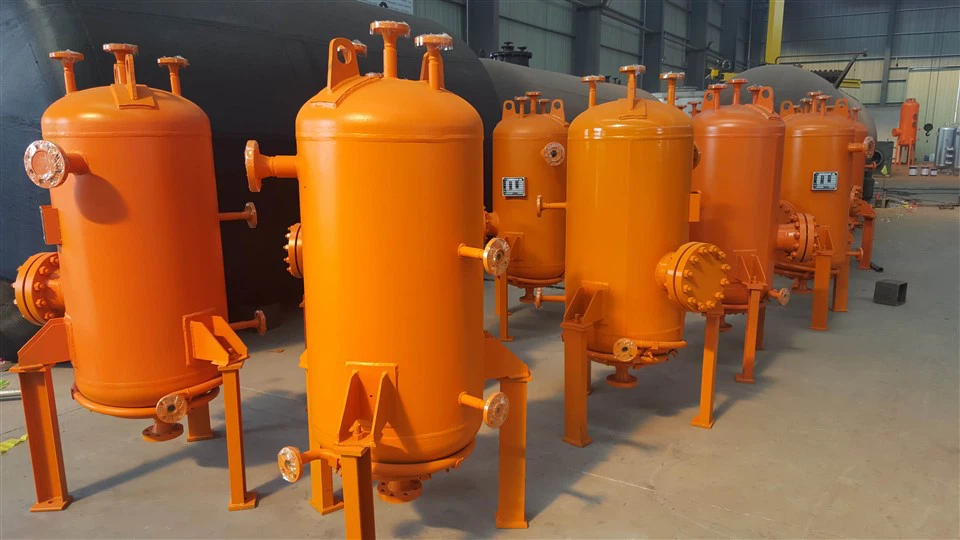

Nitrogen Storage Tank is used to store nitrogen, an inert gas. These tanks must be able to maintain a high level of purity and be designed to prevent leaks.
Conclusion
In conclusion, the quality standards for liquid storage tanks are comprehensive and cover every aspect of the tank's design, manufacturing, and operation. As a supplier, we are committed to providing our customers with high - quality tanks that meet or exceed these standards.
If you are in the market for liquid storage tanks, we invite you to contact us for further information and to discuss your specific requirements. Our team of experts can help you choose the right tank for your needs and ensure that it is installed and maintained properly.
References
- American Petroleum Institute (API). API Standards for Storage Tanks.
- International Organization for Standardization (ISO). ISO Standards for Liquid Storage Tanks.
- Environmental Protection Agency (EPA). Regulations for the Storage of Hazardous Chemicals.