

What are the leak detection methods for a liquid ammonia storage tank?
Nov 27, 2025
As a supplier of Liquid Ammonia Storage Tanks, I've dealt with a fair share of concerns regarding tank safety. One of the most pressing issues is leak detection. Liquid ammonia is a hazardous substance, and even a small leak can pose significant risks to human health and the environment. So, what are the leak detection methods for a liquid ammonia storage tank? Let's dive in.
Visual Inspection
The simplest and most basic method is visual inspection. It's like taking a good look at your car to see if there are any obvious signs of damage. For liquid ammonia storage tanks, this means checking the tank's exterior for any signs of corrosion, cracks, or other visible damage. You should also look for any signs of ammonia leakage, such as frost or ice on the tank's surface, which can indicate that ammonia is escaping and causing the surrounding air to cool.
Visual inspection is a good starting point, but it has its limitations. It can only detect leaks that are visible on the surface, and it may not be able to detect small leaks or leaks that are occurring inside the tank. That's why it's often used in conjunction with other leak detection methods.
Pressure Testing
Pressure testing is another common method for detecting leaks in liquid ammonia storage tanks. This involves filling the tank with a test fluid, usually water, and then pressurizing it to a specified level. The pressure is then monitored over a period of time to see if there are any drops, which could indicate a leak.
There are different types of pressure tests, including hydrostatic testing and pneumatic testing. Hydrostatic testing uses water as the test fluid, while pneumatic testing uses air or another gas. Hydrostatic testing is generally considered to be more accurate and reliable, but it can be more time-consuming and expensive. Pneumatic testing is faster and less expensive, but it can be more dangerous because it involves pressurizing the tank with a gas.
Ultrasonic Testing
Ultrasonic testing is a non-destructive testing method that uses high-frequency sound waves to detect flaws in materials. In the case of liquid ammonia storage tanks, ultrasonic testing can be used to detect cracks, corrosion, and other defects in the tank's walls.
The process involves sending ultrasonic waves into the tank's walls and then measuring the time it takes for the waves to bounce back. If there is a defect in the wall, the waves will be reflected differently, and this can be detected by the ultrasonic testing equipment.
Ultrasonic testing is a very effective method for detecting internal defects in the tank's walls, but it requires specialized equipment and trained personnel to perform. It's also not suitable for detecting leaks that are occurring outside the tank or in areas where the ultrasonic waves cannot reach.
Gas Detection
Gas detection is a method for detecting leaks by monitoring the concentration of ammonia in the air around the storage tank. There are different types of gas detection systems available, including fixed gas detectors and portable gas detectors.
Fixed gas detectors are installed around the storage tank and continuously monitor the air for the presence of ammonia. If the concentration of ammonia exceeds a certain level, the detector will sound an alarm, indicating that there is a leak. Portable gas detectors are handheld devices that can be used to check for ammonia leaks in specific areas or during maintenance activities.
Gas detection is a very effective method for detecting leaks, especially small leaks that may not be detected by other methods. However, it only detects leaks that have already occurred and released ammonia into the air. It does not provide any information about the location or size of the leak.
Acoustic Emission Testing
Acoustic emission testing is a non-destructive testing method that involves monitoring the acoustic emissions produced by a material when it is under stress. In the case of liquid ammonia storage tanks, acoustic emission testing can be used to detect the formation and growth of cracks in the tank's walls.
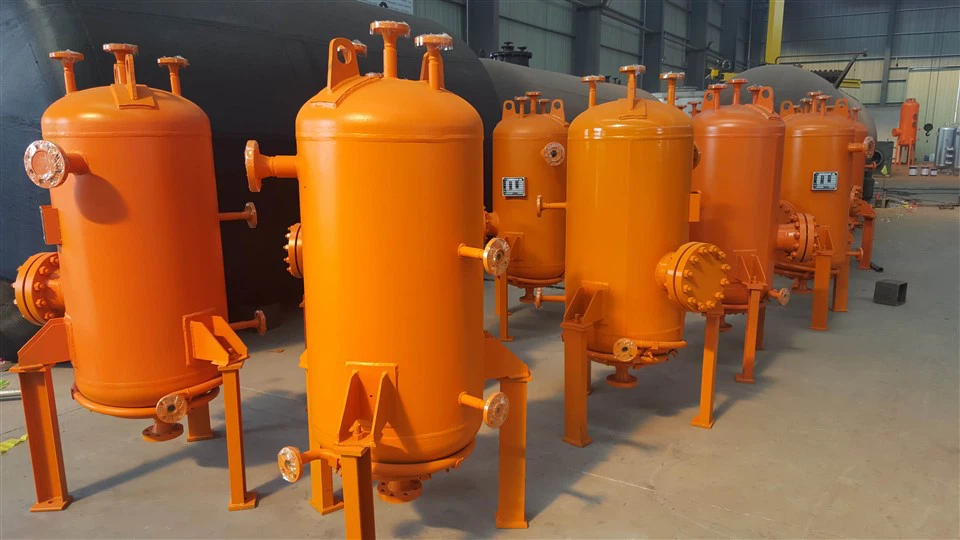

When a crack forms or grows in the tank's wall, it produces acoustic emissions in the form of high-frequency sound waves. These emissions can be detected by sensors that are attached to the tank's surface. By analyzing the characteristics of the acoustic emissions, it is possible to determine the location and severity of the crack.
Acoustic emission testing is a very sensitive method for detecting the early stages of crack formation, but it requires specialized equipment and trained personnel to perform. It's also not suitable for detecting leaks that are occurring outside the tank or in areas where the acoustic emissions cannot be detected.
Choosing the Right Leak Detection Method
As you can see, there are several different leak detection methods available for liquid ammonia storage tanks, each with its own advantages and limitations. The choice of method will depend on a number of factors, including the size and type of the tank, the location of the tank, the level of risk, and the available resources.
In most cases, it's recommended to use a combination of different leak detection methods to ensure the highest level of safety and reliability. For example, you might start with a visual inspection and then follow up with pressure testing, ultrasonic testing, and gas detection.
Conclusion
Leak detection is an essential part of maintaining the safety and integrity of liquid ammonia storage tanks. By using the right leak detection methods and performing regular inspections, you can detect leaks early and take appropriate action to prevent accidents and protect the environment.
If you're in the market for a Liquid Ammonia Storage Tank, or if you need help with leak detection or maintenance, don't hesitate to reach out. We're here to help you find the best solutions for your needs. Whether you're looking for a Deoxygenation Tower Reflux Tank or a Propane Tank, we've got you covered. Contact us today to start the conversation and let's work together to ensure the safety and efficiency of your storage solutions.
References
- ASME Boiler and Pressure Vessel Code
- API 620 - Design and Construction of Large, Welded, Low-Pressure Storage Tanks
- OSHA regulations on hazardous chemical storage and handling