

What is the weight of a stainless steel water tank?
Sep 25, 2026
Hey there! As a supplier of Stainless Steel Water Tank, I often get asked about the weight of these tanks. People want to know for all sorts of reasons - maybe they're worried about the structural integrity of where they're planning to put the tank, or they're trying to figure out shipping costs. So, let's dive into it and break down what affects the weight of a stainless steel water tank.
Factors Affecting the Weight of Stainless Steel Water Tanks
Tank Size
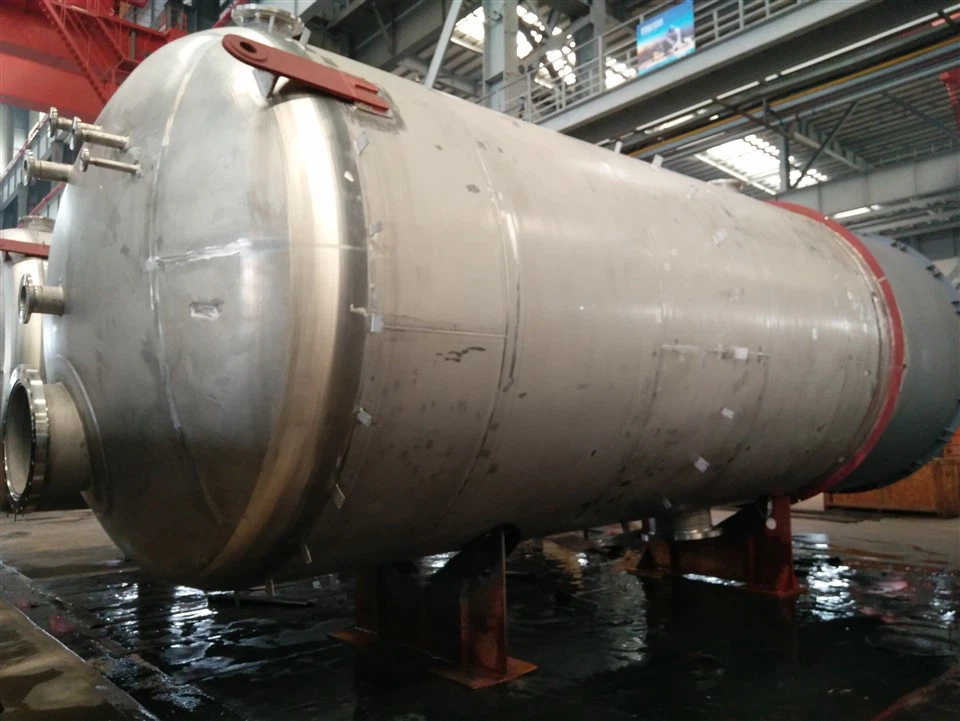
The most obvious factor is the size of the tank. It makes sense, right? A bigger tank needs more material to build, so it's going to weigh more. We offer tanks in all shapes and sizes, from small ones that you might use for a home garden to huge industrial Horizontal Stainless Steel Storage Tank and Vertical Stainless Steel Storage Tank that can hold thousands of gallons of water.
For example, a small 100-gallon stainless steel water tank might weigh around 50 - 100 pounds. But if you're looking at a 10,000-gallon tank, well, that's a whole different story. A tank of that size could weigh several thousand pounds. The weight of the tank itself is just the starting point, though. You also have to consider the weight of the water it holds.
Wall Thickness
Another crucial factor is the wall thickness of the tank. Thicker walls mean more stainless steel, and more stainless steel means more weight. We use different wall thicknesses depending on the tank's intended use. For domestic applications, where the tank might not face extreme conditions, we can get away with a thinner wall. But for industrial use, especially in harsh environments, we'll use a thicker wall to ensure the tank's durability.
A tank with a 0.06-inch wall thickness will weigh less than one with a 0.12-inch wall thickness. This difference in weight can be significant, especially for larger tanks. And it's not just about the initial weight; a thicker wall can also affect the tank's cost and the installation process.
Type of Stainless Steel
Not all stainless steel is created equal. There are different grades of stainless steel, and each has its own set of properties, including density. The most common grades we use are 304 and 316 stainless steel. Grade 316 has more nickel and molybdenum than grade 304, which makes it more resistant to corrosion, especially in chloride-rich environments like coastal areas.
But here's the thing - the difference in density between these two grades isn't huge, but it can still affect the overall weight of the tank. Grade 316 is slightly denser than grade 304, so a tank made from 316 stainless steel will be a bit heavier than one made from 304 stainless steel of the same size and wall thickness.
Calculating the Weight of a Stainless Steel Water Tank
Now, I know what you're thinking - how do I actually calculate the weight of a stainless steel water tank? Well, it's not an exact science, but we can use some general formulas to get a pretty good estimate.
First, you need to find the volume of the tank. For a cylindrical tank, the formula for volume is (V=\pi r^2h), where (r) is the radius and (h) is the height. Once you have the volume, you can figure out the amount of stainless steel needed to make the tank.
To do this, you need to know the surface area of the tank. For a cylindrical tank, the surface area formula is (A = 2\pi r^2+2\pi rh). Multiply the surface area by the wall thickness to get the volume of the stainless steel used. Then, multiply the volume of the stainless steel by its density. The density of stainless steel is usually around 7.9 - 8.05 grams per cubic centimeter.
Let's say you have a cylindrical tank with a radius of 2 feet and a height of 5 feet, and a wall thickness of 0.1 inches. First, convert all the measurements to the same units (let's use inches). The radius is 24 inches and the height is 60 inches.

The volume of the tank is (V=\pi\times(24)^2\times60\approx108,573) cubic inches. The surface area is (A = 2\pi\times(24)^2+2\pi\times24\times60\approx12,063) square inches. The volume of the stainless steel is (12,063\times0.1 = 1206.3) cubic inches.
Converting the density of stainless steel to pounds per cubic inch (since (1) gram per cubic centimeter is approximately (0.036) pounds per cubic inch), the density is about (7.9\times0.036 = 0.284) pounds per cubic inch. So, the weight of the tank is approximately (1206.3\times0.284\approx342) pounds.
The Weight of the Water
Don't forget about the weight of the water! Water weighs about 8.34 pounds per gallon. So, if you have a 500-gallon tank, the water alone will weigh (500\times8.34 = 4170) pounds. Add that to the weight of the tank itself, and you can see why it's important to plan ahead when it comes to installation.
Why Knowing the Weight Matters
Knowing the weight of a stainless steel water tank is crucial for several reasons. First of all, it helps with installation. You need to make sure that the foundation or structure where you're placing the tank can support its weight. If the weight is miscalculated, it could lead to structural damage or even a tank failure.
Secondly, it affects shipping. Shipping companies charge based on weight, so having an accurate weight estimate can help you budget for shipping costs. And if you're transporting the tank over long distances, you need to make sure that the vehicle you're using can handle the weight.
Contact Us for More Information
If you're in the market for a stainless steel water tank and have questions about weight or any other aspect, don't hesitate to reach out. We're here to help you find the perfect tank for your needs. Whether you're looking for a small domestic tank or a large industrial Horizontal Stainless Steel Storage Tank or Vertical Stainless Steel Storage Tank, we've got you covered.
We can provide you with detailed weight calculations based on your specific requirements, and we'll work with you to ensure a smooth installation process. So, get in touch with us today and let's start the conversation about your stainless steel water tank needs.
References
- "Stainless Steel Handbook" by ASM International
- "Engineering Fundamentals of the Internal Combustion Engine" by Willard W. Pulkrabek (for general engineering concepts related to volume and weight calculations)