

What are the pressure - control mechanisms in a nitrogen storage tank?
Oct 29, 2025
Hey there! As a supplier of Nitrogen Storage Tanks, I often get asked about the pressure - control mechanisms in these tanks. So, let's dive right in and talk about how we keep things in check when it comes to nitrogen storage.
First off, why do we even need pressure - control mechanisms in a nitrogen storage tank? Well, nitrogen is typically stored in a liquid state at extremely low temperatures, around - 196°C. When the liquid nitrogen starts to warm up, it turns into a gas, and this phase change can cause a significant increase in pressure inside the tank. If the pressure isn't controlled properly, it can lead to some serious problems, like tank rupture or other safety hazards.
One of the most common pressure - control mechanisms is the pressure relief valve. This little guy is like the safety valve of the tank. It's set to open at a specific pressure level. When the pressure inside the tank exceeds this pre - set limit, the valve opens up, allowing some of the nitrogen gas to escape. This way, the pressure inside the tank drops back to a safe level. For example, if we have a tank with a pressure relief valve set at 200 psi, once the pressure hits that mark, the valve will open and release the excess gas.
Another important mechanism is the pressure regulator. Unlike the pressure relief valve, which is mainly for safety, the pressure regulator is used to control the pressure of the nitrogen as it's being dispensed from the tank. Let's say you're using nitrogen in a manufacturing process where you need a constant pressure of 50 psi. The pressure regulator will make sure that the nitrogen comes out of the tank at that exact pressure, regardless of the pressure inside the main tank. It does this by adjusting the flow of nitrogen through a series of valves and diaphragms.
We also have level sensors in our nitrogen storage tanks. These sensors are crucial for pressure control because they help us monitor the amount of liquid nitrogen in the tank. As the liquid nitrogen evaporates and turns into gas, the level in the tank drops. By knowing the level, we can predict how the pressure might change. For instance, if the level is getting low, there's more space for the gas to expand, which could lead to an increase in pressure. Based on the readings from the level sensors, we can take appropriate actions, like refilling the tank or adjusting the pressure - control settings.
Now, let's talk about some of the different types of nitrogen storage tanks we offer. We have both small - scale and large - scale tanks. The small - scale tanks are great for laboratories or small businesses that only need a limited amount of nitrogen. These tanks are usually more compact and easier to install. On the other hand, our large - scale tanks are designed for industrial applications, like chemical plants or food processing facilities. These tanks can hold a huge amount of nitrogen and require more sophisticated pressure - control systems.
When it comes to the construction of our nitrogen storage tanks, we use high - quality materials that can withstand the extreme temperatures and pressures. The tanks are made of stainless steel or other alloys that are resistant to corrosion. This ensures the longevity of the tank and the safety of the nitrogen stored inside.
In addition to the basic pressure - control mechanisms, we also offer some advanced features in our nitrogen storage tanks. For example, we have remote monitoring systems. With these systems, you can keep an eye on the pressure, temperature, and level of the nitrogen in the tank from anywhere in the world. All you need is an internet connection. This is especially useful for large - scale operations where you might have multiple tanks spread out over a large area.
We also offer custom - built nitrogen storage tanks. If you have specific requirements for pressure control, such as a very high or very low pressure range, we can design and build a tank that meets your needs. Our team of engineers will work closely with you to understand your requirements and come up with the best solution.
Now, if you're in the market for a nitrogen storage tank, you might also be interested in some of our other products. We have Deoxygenation Tower Reflux Tank and Propane Tank. These tanks also have their own unique pressure - control mechanisms, but they're designed for different applications. The deoxygenation tower reflux tank is used in chemical processes where oxygen needs to be removed, and the propane tank is for storing propane gas.
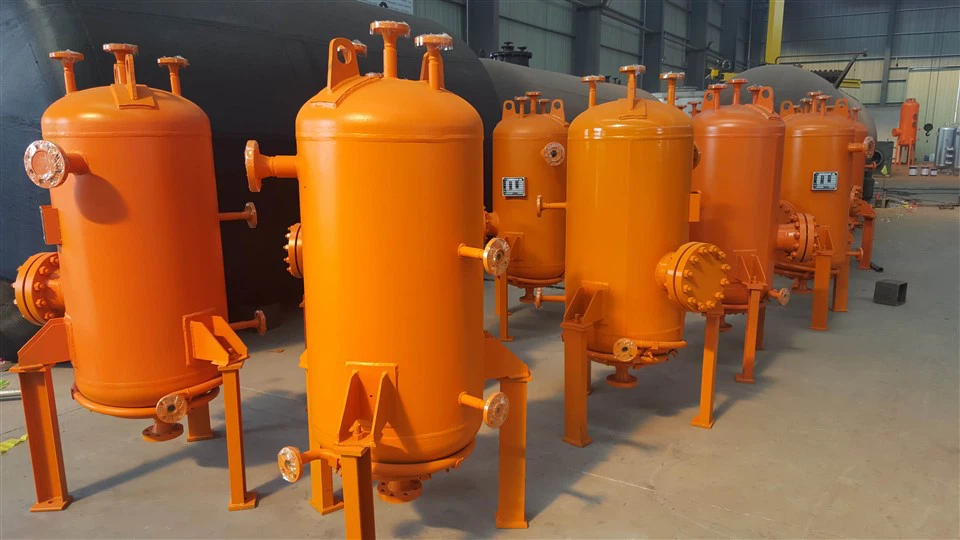

If you're looking for a reliable nitrogen storage tank with top - notch pressure - control mechanisms, look no further. Our Nitrogen Storage Tank is built to the highest standards and comes with all the necessary pressure - control features. Whether you're a small lab or a large industrial facility, we have the right tank for you.
If you're interested in learning more about our nitrogen storage tanks or have any questions about pressure - control mechanisms, don't hesitate to reach out. We're here to help you find the best solution for your nitrogen storage needs. Contact us today to start the procurement process and let's have a chat about how we can meet your requirements.
References
- Perry, R. H., & Green, D. W. (Eds.). (2008). Perry's Chemical Engineers' Handbook. McGraw - Hill.
- Ludwig, E. E. (2001). Applied Process Design for Chemical and Petrochemical Plants. Gulf Professional Publishing.