Analysis Of The Logistics Characteristics Of Vacuum Furnaces: Key Considerations in Foreign Trade Transportation
May 20, 2025
As high-temperature heat treatment equipment, vacuum furnaces are widely used in aerospace, automobile manufacturing, metal processing and other fields. Its special structural design and precision components put forward higher requirements for logistics and transportation. Understanding the logistics characteristics of vacuum furnaces will help foreign trade companies optimize supply chain management and ensure safe and efficient delivery of equipment.
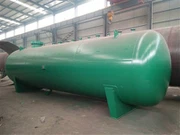
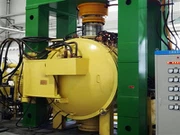
Vacuum furnaces are usually composed of furnace bodies, heating systems, vacuum units and control systems, and the overall weight can reach several tons or even tens of tons. It is large in size and complex in structure, and some components such as heating elements and vacuum seals are extremely sensitive to vibration and shock. During transportation, professional reinforcement measures must be adopted, such as customized steel structure frames, internal buffer supports and anti-slip fixtures to prevent displacement or collision during transportation.
In the logistics link, the packaging design of vacuum furnaces is particularly critical. The outer packaging needs to be made of moisture-proof and rust-proof high-strength composite materials, and the internal components need to be fixed in partitions to avoid mutual friction during transportation. For precision instruments and electrical components, an additional anti-static protective layer is required. Some super-large vacuum furnaces also need to be disassembled into modular units for transportation and professionally assembled and debugged at the destination.
The choice of transportation mode directly affects the cost and timeliness. Sea transportation is suitable for long-distance and large-volume transportation, but attention should be paid to port lifting equipment and storage conditions; land transportation is more flexible and suitable for medium and short-distance transportation, but there are strict requirements for road height and weight limits. Although air transportation has the fastest timeliness, it is costly and limited by the load capacity of the aircraft model, and is usually only used for emergency spare parts transportation.
Complete technical information, including equipment specifications, electrical parameters and safety certification documents, must be prepared in advance for customs clearance. Some countries have special inspection requirements for imported industrial equipment. It is recommended that foreign trade companies communicate with local agents in advance to ensure smooth customs clearance.
Mastering the logistics characteristics of vacuum furnaces can not only reduce transportation risks, but also improve customer satisfaction. Foreign trade companies should choose logistics service providers with experience in special equipment transportation, and provide reliable protection for global customers through professional packaging, transportation and installation services.